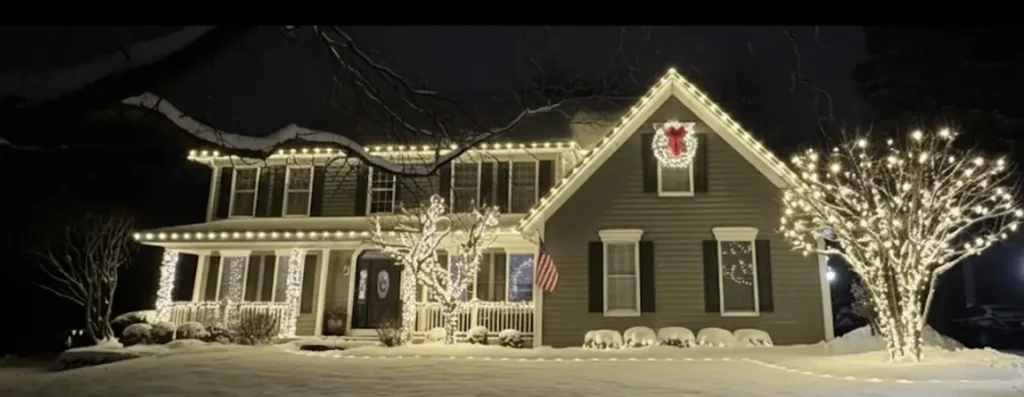
A bad holiday light installation is easy to spot: uneven spacing, bulbs facing the wrong way, exposed wires, or skipped architectural features. Professional installations use precise spacing, outward/downward bulbs, commercial-grade hardware, and hidden wiring for a clean, balanced, and safe display.What Are the Signs of a Bad Holiday Light Installation?
What Are the Signs of a Bad Holiday Light Installation?
- Bulbs facing upward or inward instead of outward
- Incorrect or uneven C9 spacing
- Roof peaks, dormers, or returns left unlit
- Wires dangling from soffits or rooflines
- Exposed connections in the middle of a run
- Mismatched Kelvin temperatures or inconsistent color
- Architectural features skipped entirely
How Should Holiday Lights Be Designed Professionally?
Professional installations start with design: evaluating rooflines, symmetry, architectural features, and viewing angles before installing a single bulb.
- Roof peaks are centered
- Lines flow evenly across elevations
- Key architectural elements are highlighted
- The home looks balanced from the street
Why Precision-Cut Lighting Matters
- Clean start and end points
- No mid-run plugs
- Consistent spacing
- Tailored, built-in appearance
How Bulb Color and Spacing Affect Quality
- Consistent Kelvin temperature across the display
- Proper C9 spacing for balance and proportion
- Outward or downward-facing bulbs for even illumination
Why Clips and Hardware Matter
- Commercial-grade, roof-specific clips
- Non-invasive mounting methods
- Clips rated for winter conditions
How Professionals Ensure Holiday Light Safety
- Load-balanced circuits
- Weather-rated connections
- Proper ladder and roof safety practices
- GFCI-protected power sources
Why Tight Lines and Clean Wiring Are Important
- Ongoing performance checks
- Rapid replacement of failed bulbs
- System adjustments after storms
How Holiday Lights Should Be Removed and Stored
- Safe takedown procedures
- Proper coiling and labeling
- Climate-controlled storage
- Inspection before reinstallation
Bad vs Professional Holiday Light Installation
| Feature | Bad Installation | Professional Installation |
| Spacing | Uneven | Even |
| Bulb Direction | Random or upward | Outward/downward |
| Wiring | Exposed or sagging | Hidden and tight |
| Architectural Coverage | Skipped | Fully highlighted |
| Safety | Inconsistent | Load-balanced & protected |
Frequently Asked Questions About Holiday Light Installations
Why don’t some homes have bulbs at the roof peaks?
Installers often start runs at the gutter edge instead of the peak, causing misalignment that leaves peaks dark year after year.
Why do holiday lights fail mid-season?
Common causes include poor connections, overloaded circuits, low-quality clips, and improper wire routing.
Is professional holiday lighting safer than DIY?
Yes. Professionals use ladder protection, fall safety equipment, power testing, and proven installation standards.
Why does professional holiday lighting cost more?
Custom design, premium materials, proactive maintenance, safety equipment, and proper storage provide long-term value and reliability.